

West Coast Plants
Blue Pagoda™ Haskap (Honeyberry)
Blue Pagoda™ Haskap (Honeyberry)
Couldn't load pickup availability
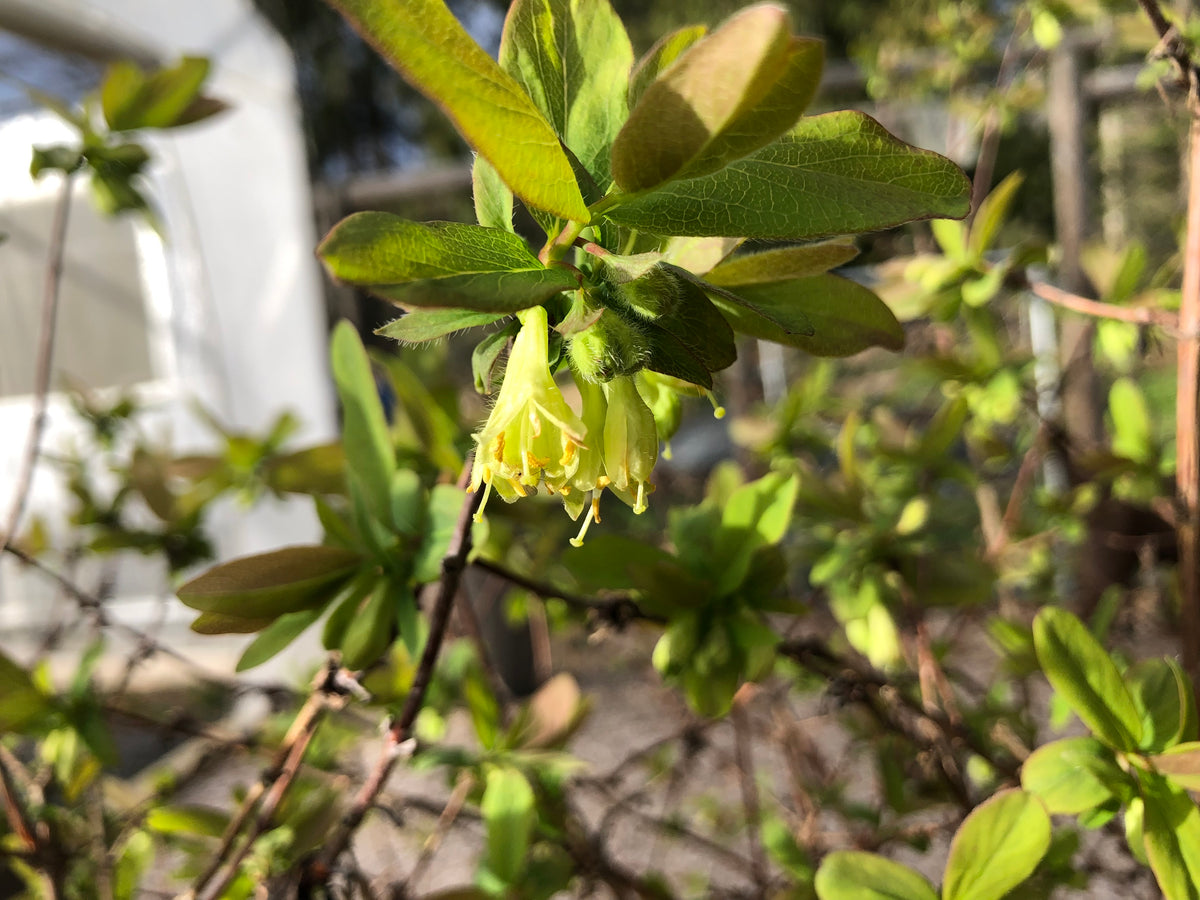
Blue Pagoda™ is a northern Japanese haskap selection prized for its high yields of large, sweet, dark-blue berries with excellent flavour and a firm texture. Widely grown and popular in northern Japan, this late-blooming variety forms an attractive shrub reaching about 4–5 feet tall.
Haskaps, also known as honeyberries or blue honeysuckle, are exceptionally cold-hardy, deciduous fruiting shrubs native to northern regions of Asia, Europe and North America. They are among the first berries to ripen each year, often producing ripe fruit before strawberries. The elongated, deep-blue berries have a distinctive sweet-tart flavour often compared to blueberries, with notes of raspberry, blackberry or grape depending on the variety. They are particularly rich in anthocyanins and other antioxidants, as well as vitamin C and other nutrients.
Haskaps are long-lived (30-50+ years) and perform best in full sun to part shade in well-drained soil. They are extremely winter hardy and relatively trouble-free, with few serious pest or disease problems.
Haskap berries are delicious eaten fresh and also freeze exceptionally well. Their rich colour and sweet-tart flavour make them excellent for jams, jellies, pies, sauces, smoothies, baking, juice and wine.
Common names: Blue Pagoda™ Haskap, Blue Pagoda™ Honeyberry, Blue Honeysuckle, Fly Honeysuckle, Sweetberry Honeysuckle, Blue-Berried Honeysuckle
Edible: Fruit
Harvest timing: May-June
Scientific name: Lonicera caerulea var. edulis 'Chitose #11' (aka Blue Pagoda™)
Light requirements: Part sun (benefits from afternoon shade in hotter regions as leaves are prone to sun scorch, especially in later summer)
Full-grown size: 4-5' tall x 4-5' wide (upright growth habit)
Hardiness: Zone 2
Pollination: Late blooming. Requires cross-pollination with a different variety of late blooming haskap, such as Blue Forest™ or Blue Hikkaido™.
Wildlife: Flowers attract early spring pollinators and fruit attracts birds (similar to blueberries).
Origin: Species native to northern regions of Asia, Europe and North America. Cultivar is from northern Japan.
Noteworthy: Heavy crops of large, sweet, firm berries. Very cold hardy.
Share