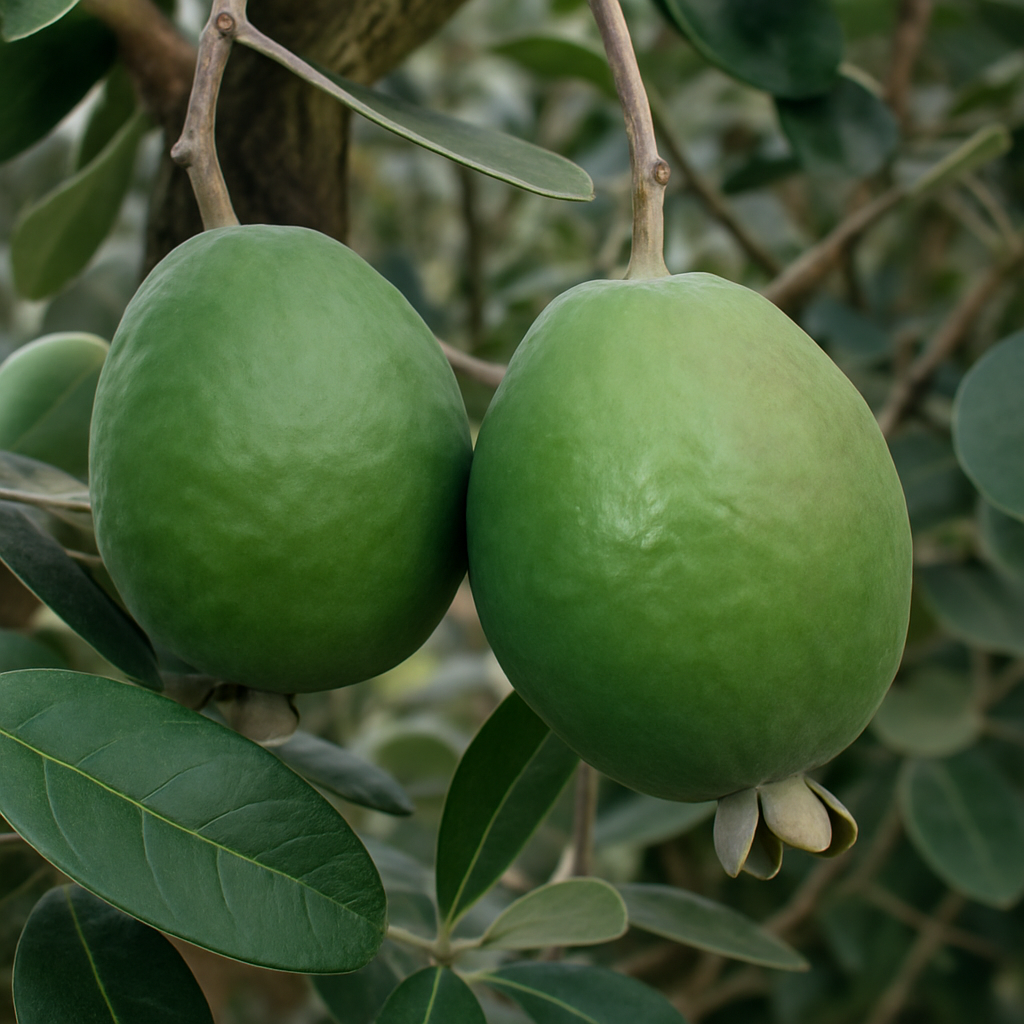
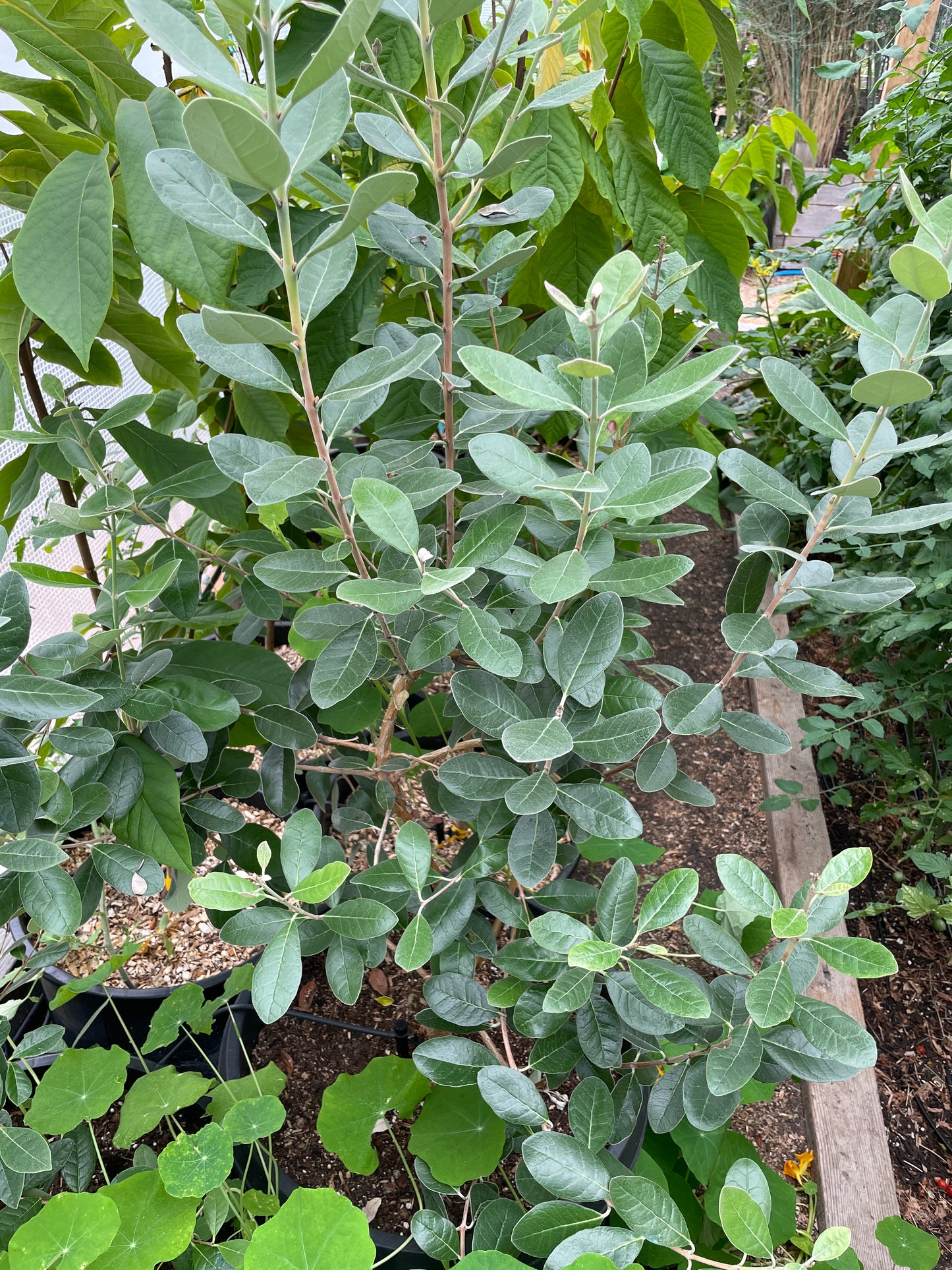
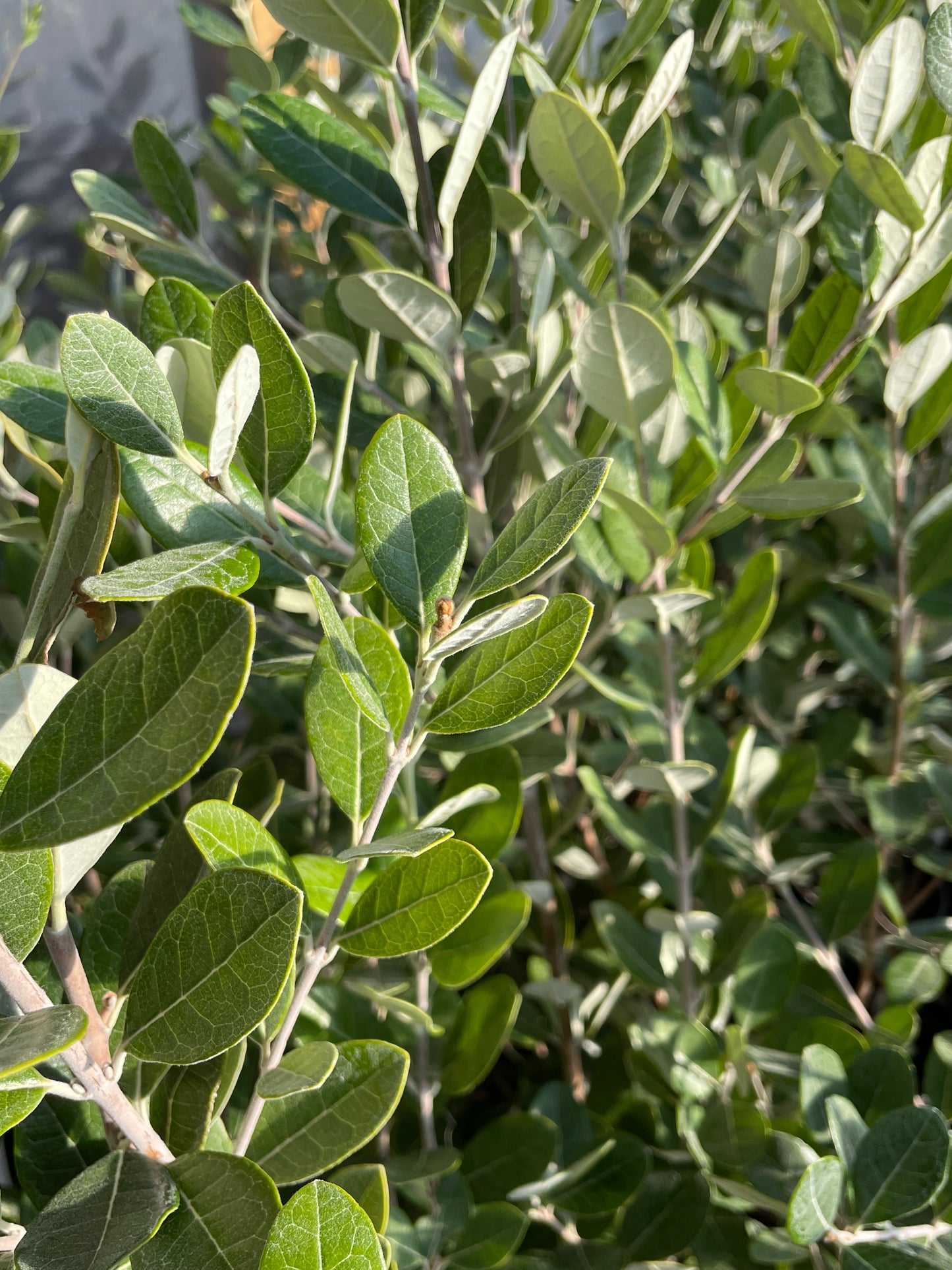
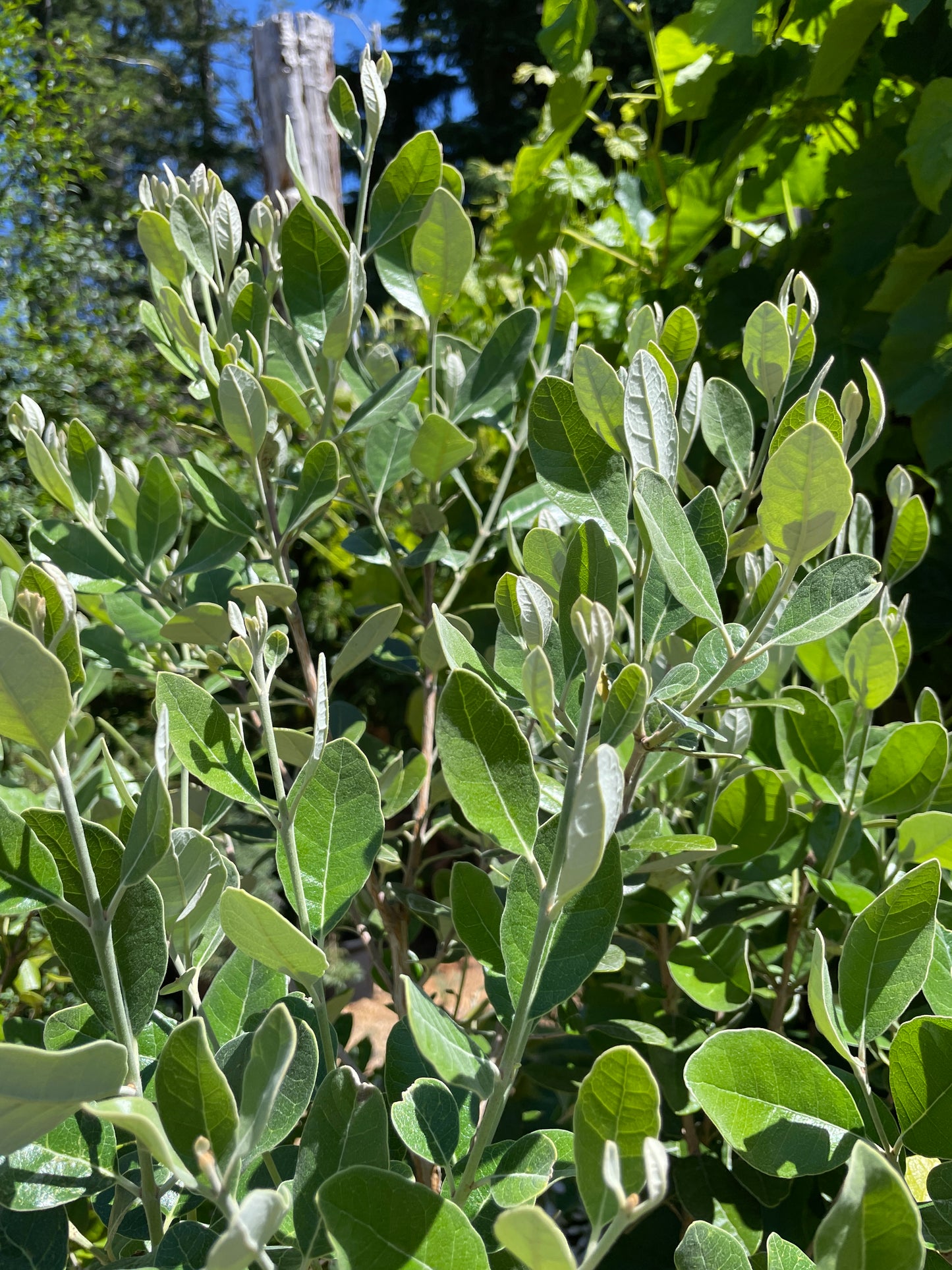
Anatoki™ pineapple guava is an early-ripening variety from New Zealand, valued for its heavy yields of large, sweet, and richly flavoured fruit. Ripening in early fall, it's an excellent choice for the Pacific Northwest and other regions with mild winters.
Pineapple guava, also known as Feijoa, is a temperate subtropical, evergreen shrub that offers delicious harvests of tropical tasting fruit with a guava-like flavour.
Native to the cool highlands of South America, pineapple guava has become especially popular in New Zealand, where it’s grown commercially and enjoyed as a beloved backyard crop.
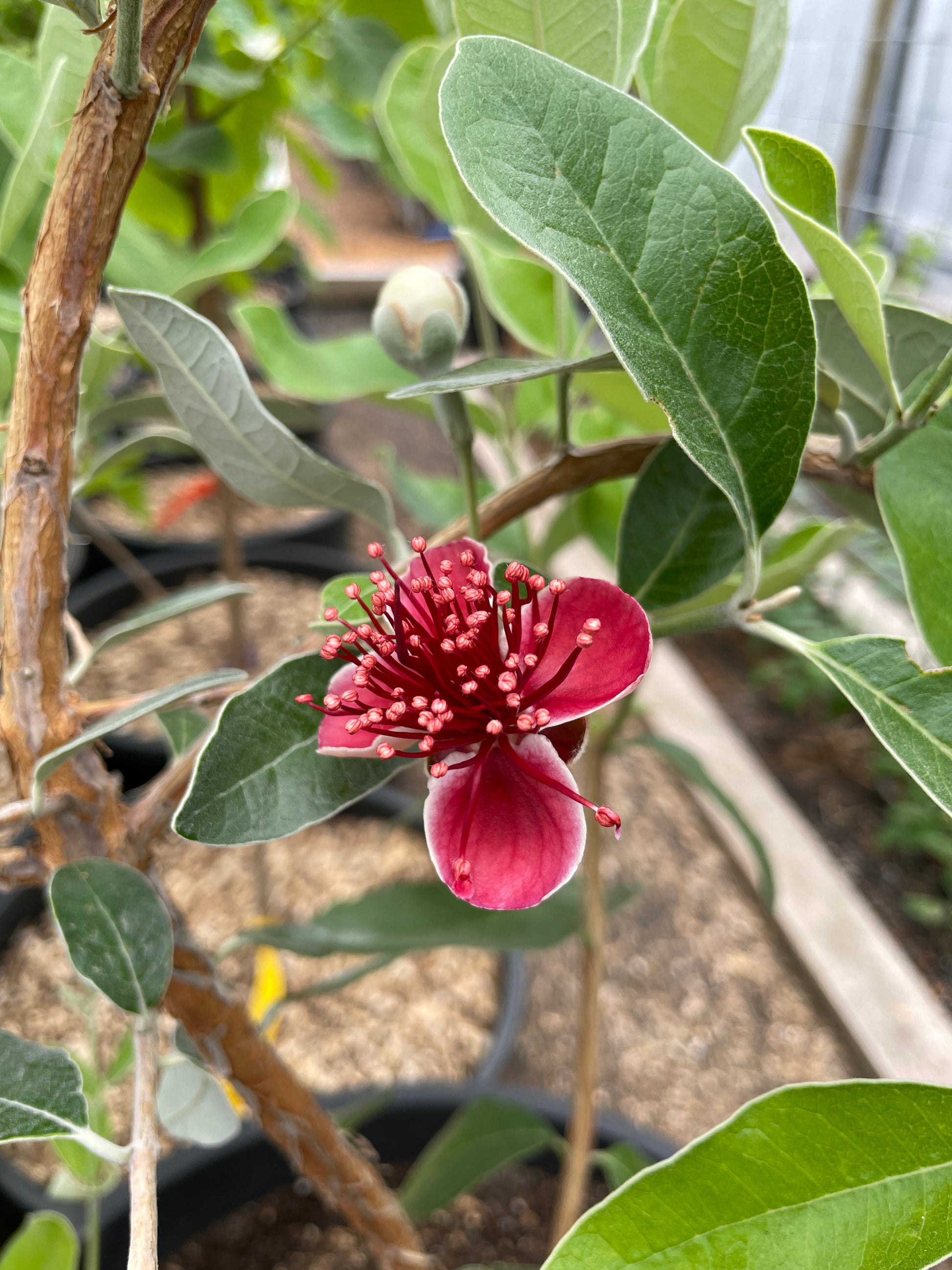
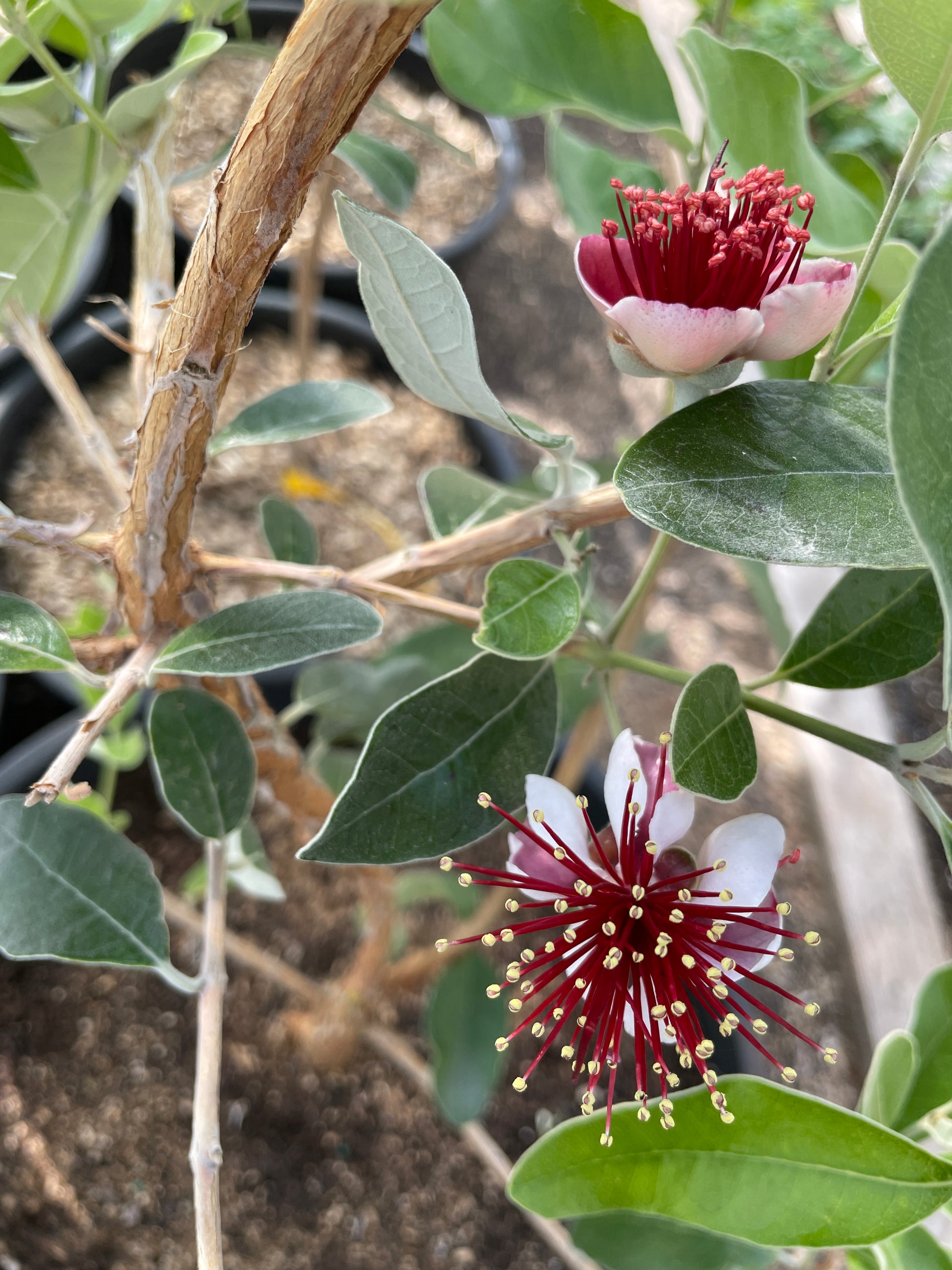
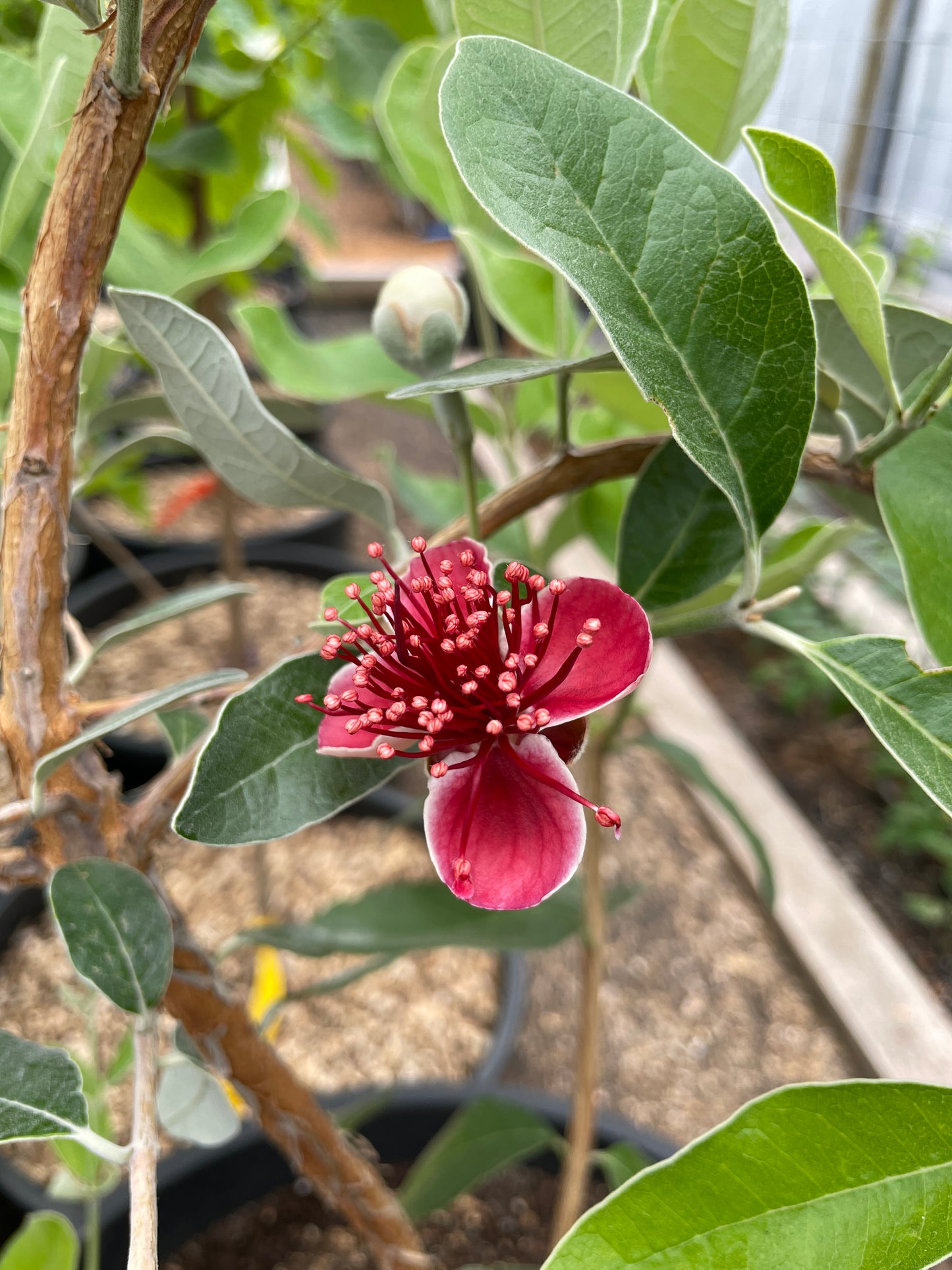
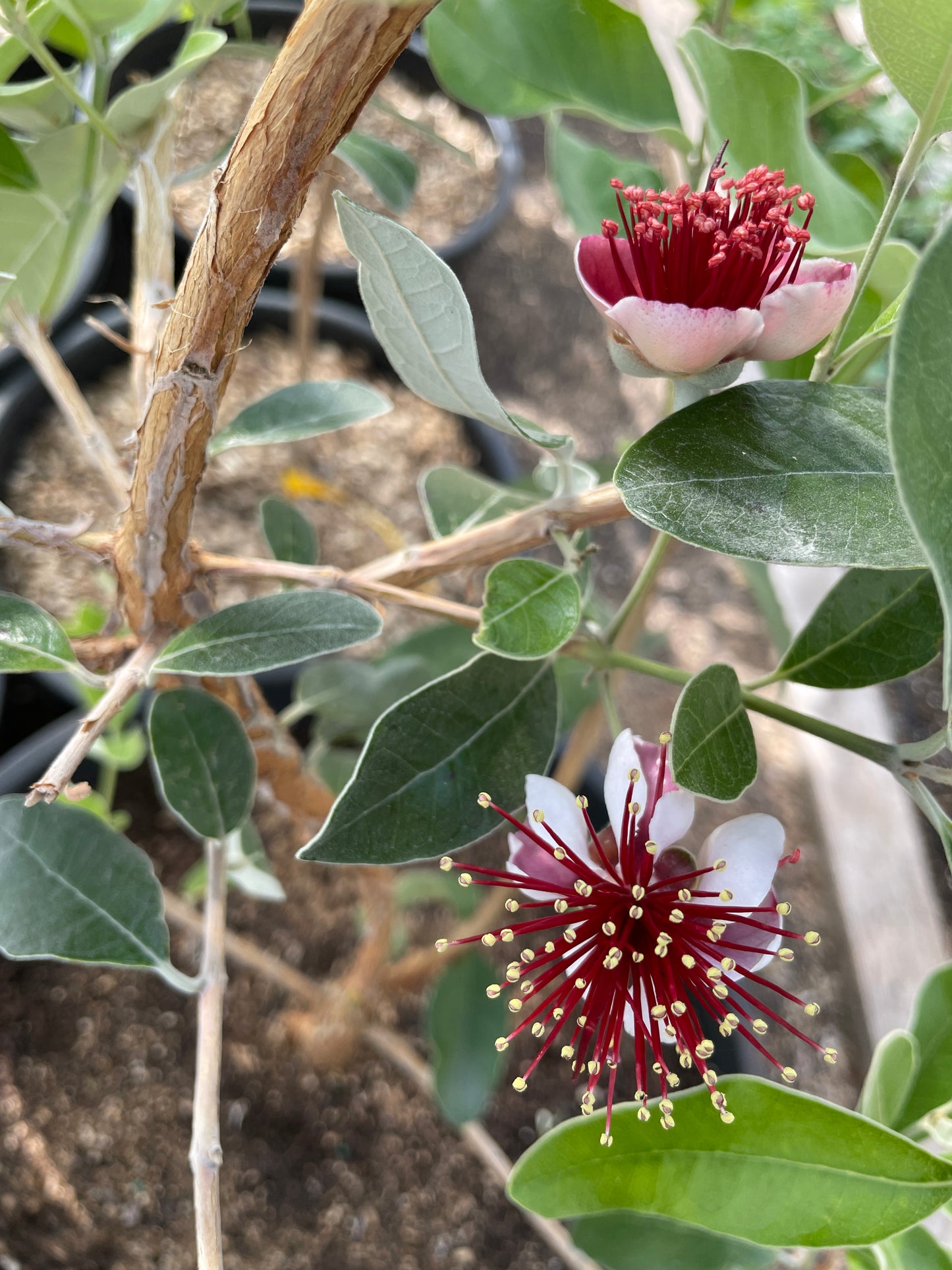
In late spring, pineapple guavas bloom with showy white-and-crimson flowers. The flower petals are edible, and they are so sweet they taste like cotton candy.
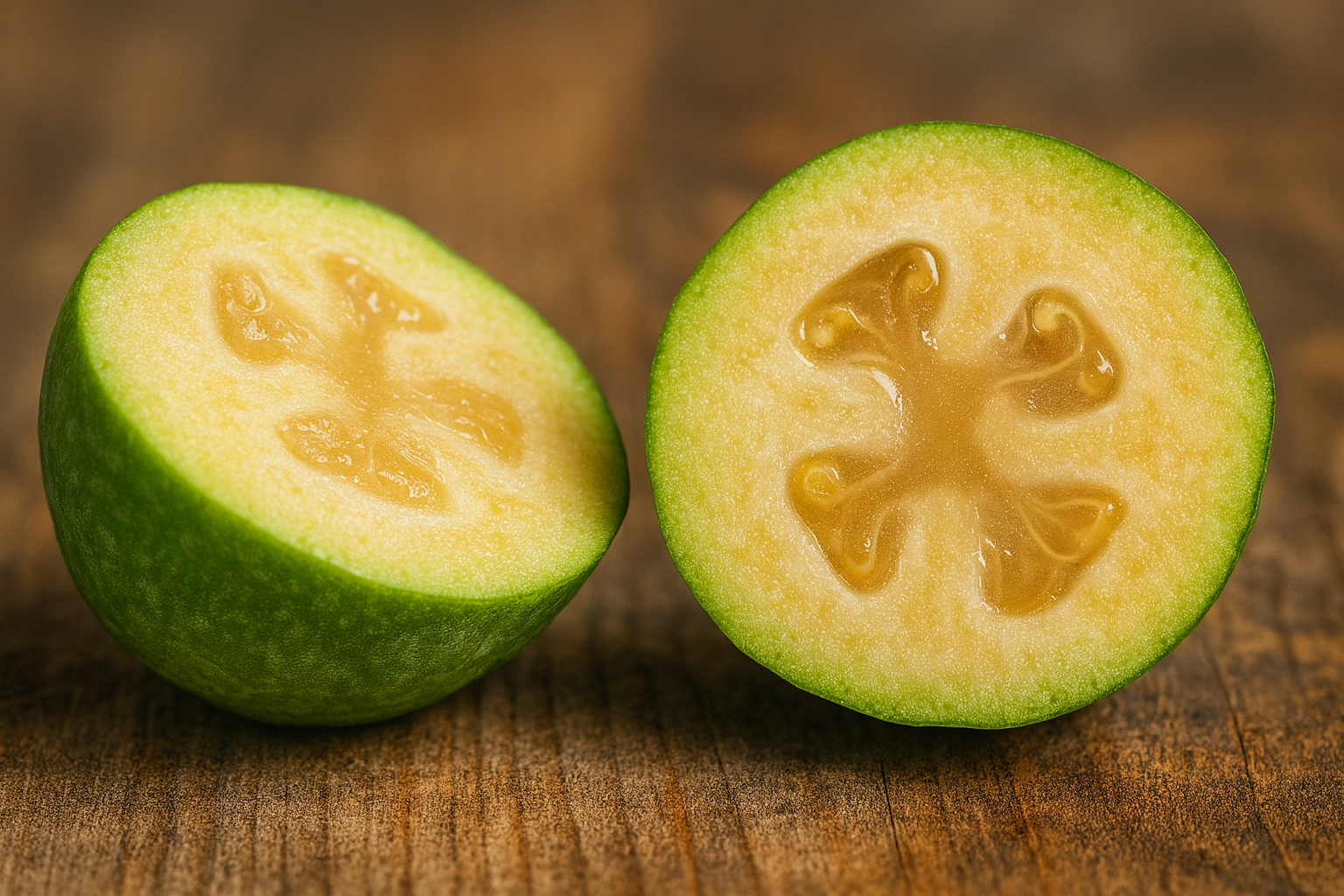
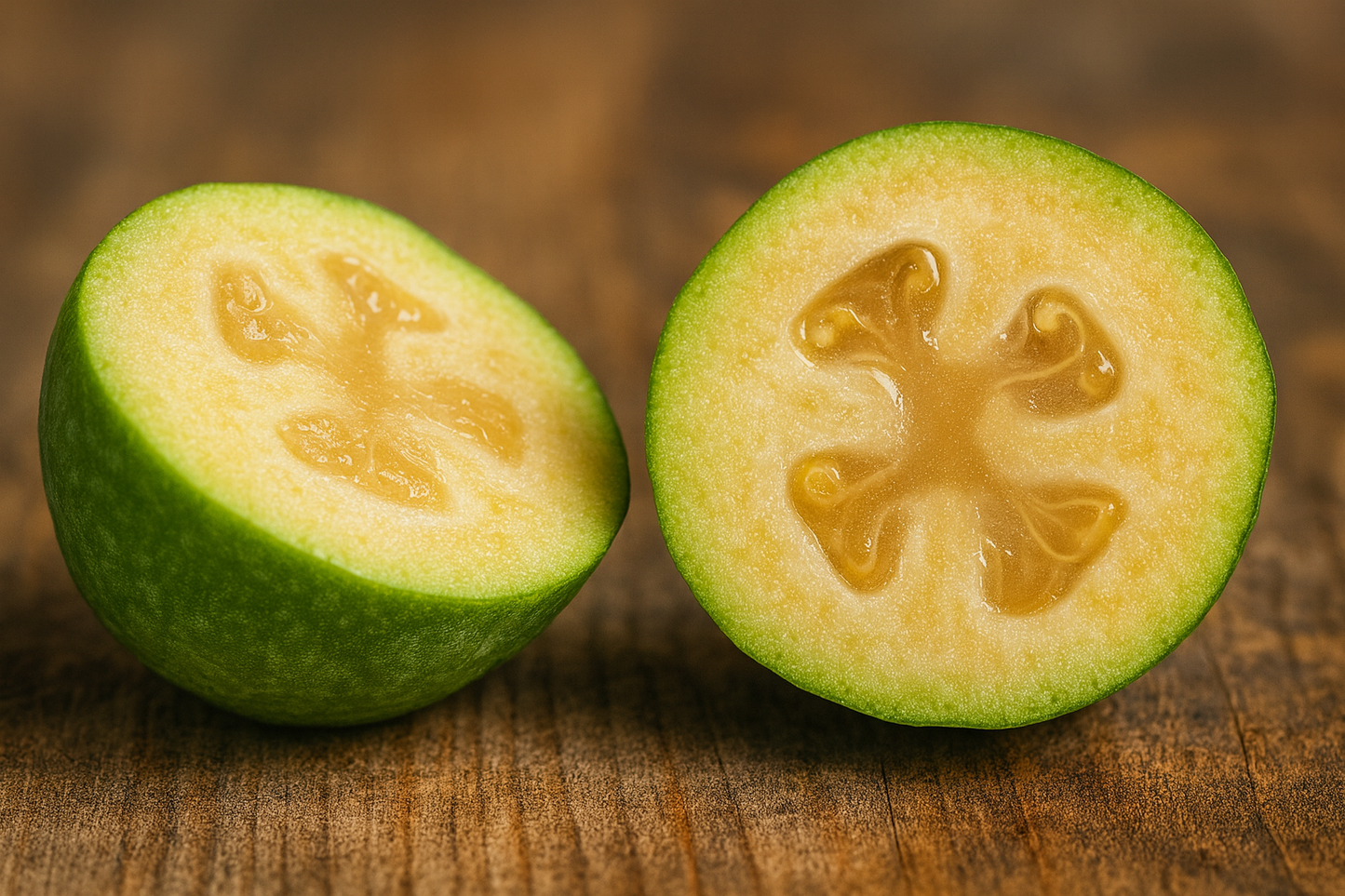
By autumn, the plant produces fragrant, egg-shaped fruits with a tropical flavour that's described as a blend of pineapple, guava, and mint.
Drought-tolerant once established, pineapple guavas thrive in full sun and well-drained soil. They are cold hardy to Zone 7 (-18ºC) but treating them as a Zone 8 plant (-12ºC or warmer) will see them do better over winter. Keeping them sheltered from winter winds also helps, especially because they keep their leaves through winter.
Pineapple guava shrubs are becoming increasingly popular, with a very devoted following. We offer early ripening, grafted cultivars.
Common names: Feijoa, Pineapple Guava, Guavasteen, Brazilian Guavas, Fig Guavas, Guayabo Del Pais
Edible: Fruit and flowers
Harvest timing: Early season (late September - October)
Scientific name: Acca sellowiana 'Anatoki' (previously Feijoa sellowiana 'Anatoki'™)
Light requirements: Full sun
Full-grown size: 6.5-10' tall x 5.5-6' wide
Hardiness: Zone 7 (-18ºC), but will do better in Zone 8 or warmer (above -12ºC).
Pollination: Partially self-fertile, but cross-pollination with another variety of pineapple guava can increase yields and is recommended.
Wildlife: Flowers and fruit attract birds, bees, butterflies.
Origin: Native to South America. Cultivar developed in New Zealand.
Noteworthy: Evergreen. Tropical tasting fruit, edible flowers.